


Finding the exact parts for C1 Corvettes required to bring a solid-axle roadster back to factory specifications demands relentless attention to historical accuracy. Restoring a first-generation model, whether a rare 1953 blue-flame inline-six or a fuel-injected 1962 model, presents unique challenges.
Decades of exposure, previous repair work, and missing components make finding true New Old Stock items or ultra-precise reproduction pieces crucial for serious restorers. At CS of MD West, we support owners, shop professionals, and collectors by supplying pristine original NOS components, precision-restored factory gauge clusters, and high-quality manufactured replacement items.
Our team specializes in helping owners navigate the rigorous demands of National Corvette Restorers Society judging standards. While many suppliers offer generic aftermarket inventory, we focus heavily on stocking genuine vintage inventory and offering specialized mail-in restoration services.
We prioritize high-grade NOS pieces, meticulous in-house gauge restorations, and premium-quality made-to-order reproductions. By concentrating on component accuracy, correct metal finishes, and verified date coding, we help you preserve the historical lineage and market value of your classic vehicle.
Achieving NCRS Flight Award Authenticity with Original GM NOS Components
Genuine NOS components preserve full point values during NCRS Flight Award and Bloomington Gold evaluations by matching exact original casting shapes, tooling marks, metal finishes, and date codes that modern reproduction parts often fail to replicate.
For owners pursuing top-tier honors like an NCRS Top Flight Award or Bloomington Gold certification, component accuracy is non-negotiable. Judges scrutinize every corner of the vehicle, examining surface texture, stampings, tooling marks, and material thickness.
Aftermarket items, while functional for daily drivers, often fail under close inspection due to incorrect casting shapes, modern font geometry, or improper finishes.
Securing genuine factory-original stock guarantees that your vehicle retains 100 percent historical correctness down to the smallest detail.
Sourcing verified parts for C1 Corvettes through our inventory ensures that critical physical markers match factory production patterns without requiring artificial aging or re-stamping. In addition to NOS inventory, we provide access to premium reproduction items crafted specifically to fill the gaps where original stock no longer exists. Our reproduction components are engineered to replicate assembly line items seamlessly, matching original dimensions and material performance.
- Certified Factory Markings: Original inspection stamps and date codes cross-reference directly against your chassis build timeline.
- Investment Protection: Sourcing verified New Old Stock items preserves the long-term monetary value of a full frame-off restoration.
- Precise Metal Finishes: Original plating and casting methods match exact assembly line criteria evaluated by field judges.
- Elimination of Fitting Rework: Exacting dimensions prevent tedious body or mechanical modifications during installation.
Parts for C1 Corvettes Chart
| Component Category | Factory NOS Standard | Generic Aftermarket Comparison |
|---|---|---|
| Date Coding | Verified assembly line matching | Missing or incorrect font geometry |
| Metal Finishes | Period-correct cad/zinc/phosphate | Modern bright plating or raw finish |
| Rubber Profiles | Exact 1950s durometer & compression | Harder modern synthetic compounds |
| Tooling Marks | Authentic GM manufacturing dies | Smoothed or altered casting lines |
| Structural Fit | Bolt-on alignment to factory fiberglass | Requires shaving or bracket modification |
Sourcing Hard-to-Find NOS Body Seals and Trim Hardware
Why is factory-correct rubber weatherstripping necessary for C1 fiberglass bodies?
Factory-profile rubber weatherstripping provides precise channel alignment and proper compression rates, sealing the cabin against moisture while preventing door binding, fiberglass stress, or paint chipping.
Exterior body panels on early fiberglass bodies present distinct installation demands, particularly along door seams, hardtop contact points, and trunk gutters. Utilizing authentic parts for C1 Corvettes ensures that exterior components align properly with original fiberglass contours. Factory rubber formulas engineered during the 1950s provided specific compression rates and profile shapes that generic modern replacements rarely reproduce with accuracy.
To maintain strict exterior authenticity, restorers frequently seek out items like the 1956-1958 Corvette Door Main Weatherstrip Pair NOS GM. Original NOS weatherstripping pairs provide exact channel alignment, preventing binding when doors are closed while establishing a tight weather seal. Using original rubber profiles avoids door fitment issues caused by oversized aftermarket seals, protecting custom paint work from chipping along door edges.
Protecting Solid-Axle Fiberglass Bodies from Environmental Damage
- Water Intrusion Prevention: Pliable, factory-molded seals keep moisture away from inner floorboards, dash wiring, and floor insulation.
- Acoustic Noise Reduction: Properly fitted door seals, header strips, and window channels eliminate wind roar at highway cruising speeds.
- Door Seam Alignment: Correct rubber durometer allows doors to latch smoothly flush with surrounding bodywork.
- Preservation of Paint Edges: Eliminates high-pressure contact points that cause paint flaking along fiberglass door jams.
Restoring Mechanical Precision with Period-Correct Engine Assemblies
Which mechanical engine parts maintain factory balance on early V8 Corvettes?
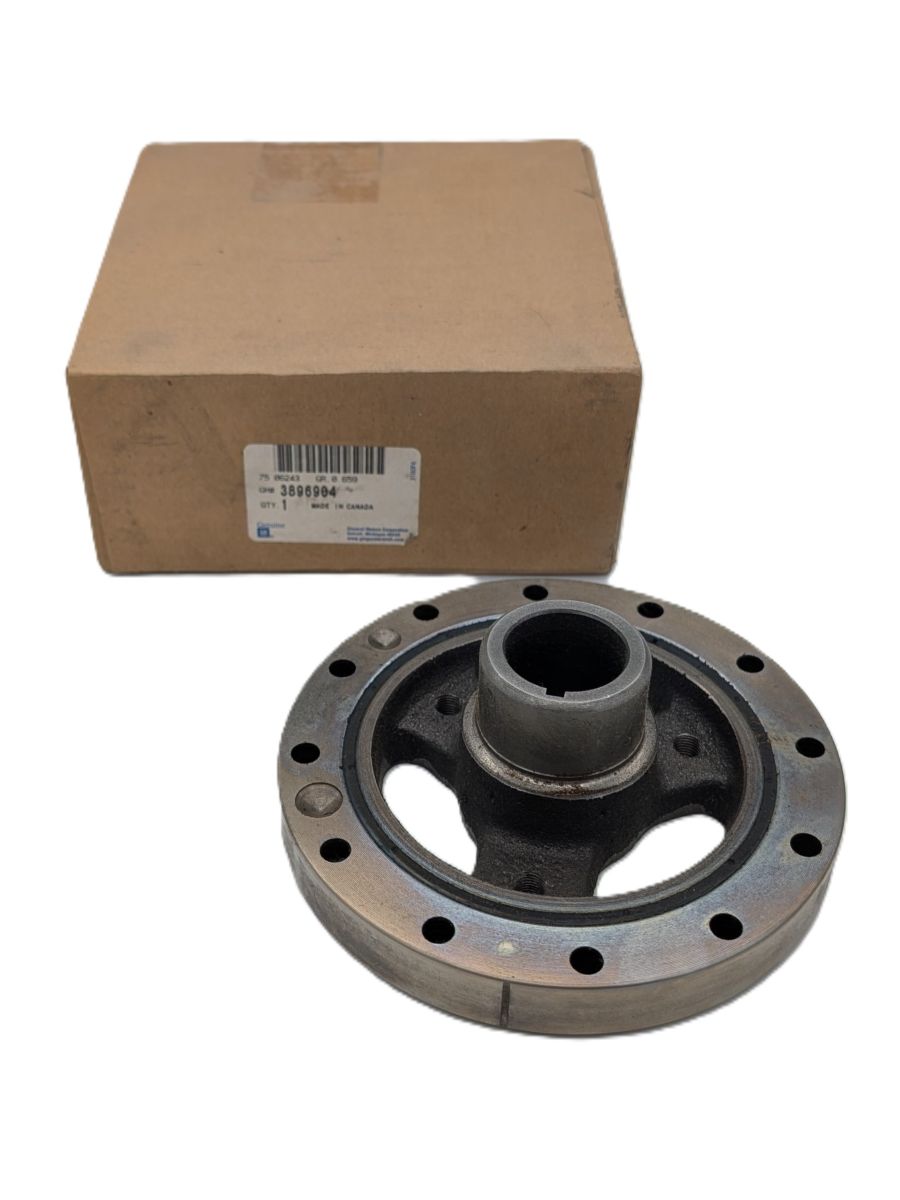
Authentic components like the GM 3896904 harmonic balancer preserve correct crankshaft vibration dampening, pulley alignment, and casting dimensions for 283ci and 327ci small-block engines.
Maintaining engine performance requires components that offer operational durability while retaining factory-correct cosmetic details. Under the hood, visible engine accessories draw immediate scrutiny from enthusiasts and judges alike.
Sourcing correct engine parts for C1 Corvettes allows you to maintain the precise balance and mechanical response of early small-block V8 engines without compromising on period correctness.
For owners focusing on internal balance and front-engine dress accuracy, locating components like the 1957-1961 1962 1968 250-300hp Corvette NOS Harmonic Balancer GM 3896904 is vital. Designed for 283ci and 327ci engine configurations, an authentic GM harmonic balancer provides proper crankshaft vibration dampening while exhibiting the exact casting dimensions and weight distributions specified by Chevrolet engineers. Installing an original unit ensures long-term crankshaft health and retains total authenticity inside the engine bay.
Preserving Engine Bay Aesthetics and Factory Finishes
- Accessory Drive Alignment: Factory-specified pulleys and balancers prevent belt slippage, squeal, or premature throwing at elevated RPM.
- Bearing Life Protection: Proper belt depth and balance prevent uneven loads on water pump, generator, and alternator bearings.
- Casting Dimension Accuracy: Maintains true clearances between front engine crossmembers, timing covers, and radiator shrouds.
- Broad Generation Support: Our inventory spans solid-axle roadsters while also offering hard-to-find C2 Corvette parts for mid-year builds.
Dashboard Assembly and Gauges Instrument Cluster Restoration
How are classic C1 Corvette dashboard gauges restored to original factory accuracy?
The instrument cluster of a first-generation roadster serves as the focal point of the interior cabin. Facing the driver, these intricate gauges combine art-deco design with functional mechanical feedback. Over time, gauge needles fade, internal springs lose calibration, and face plates discolor due to sun exposure. Restoring dashboard assemblies requires specialized knowledge, precision tooling, and correct replacement components.
Our comprehensive restoration services cover everything from speedometer recalibration to tachometer rebuilds and gauge face refinishing. We meticulously disassemble each cluster, servicing internal movement assemblies, replacing worn gears, and renewing face markings. By offering professional restoration alongside our parts inventory, we help owners restore dashboard functionality while maintaining absolute visual accuracy.
Correcting Interior Details with Period-Specific Instrumentation
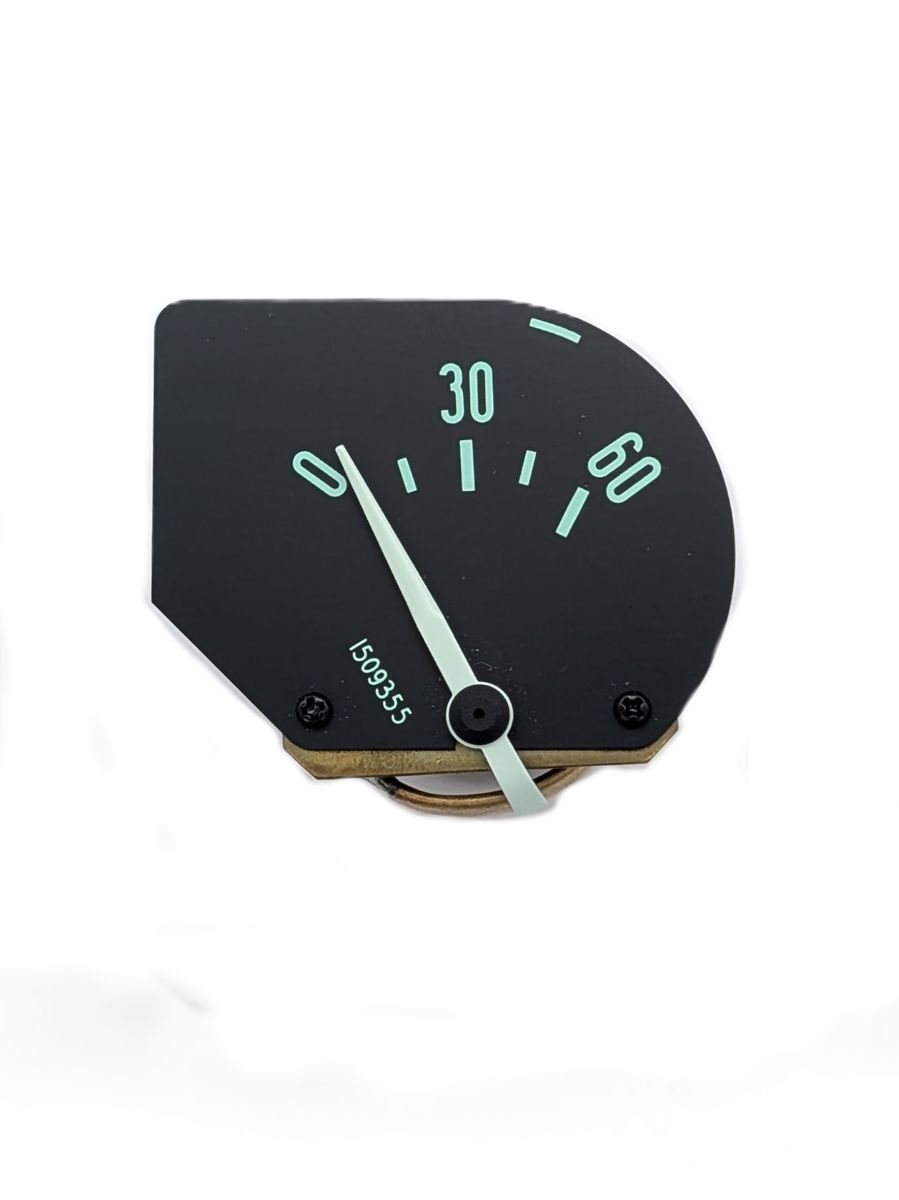
- Year-Specific Face Graphics: Units like the 1961-1962 Corvette 60lb Oil Gauge with Green Print match the exact typography and color palette used in late C1 production.
- Recalibrated Internal Movements: Precision bench testing ensures oil pressure, water temperature, fuel level, and speed readings remain accurate.
- Restored Chrome Bezels: Outer trim rings and glass lenses are restored or replaced to eliminate pitting and cloudiness.
- Mail-In Restoration Convenience: Owners ship their original cluster assemblies directly to our facility for complete in-house overhaul and return.
Frequently Asked Questions About Parts for C1 Corvettes
What makes original GM NOS components superior to modern reproductions?
NOS parts were manufactured by General Motors during or near the original vehicle production run, ensuring they carry the exact factory dimensions, metallurgy, date coding, and tooling marks required for top-tier judging.
How does the mail-in gauge cluster restoration service operate?
Customers ship their original dashboard instrument cluster to our facility, where our technicians disassemble, clean, rebuild internal mechanical gears, recalibrate movements, refinish face graphics, and return a turn-key unit.
Why are gauge face colors and print styles different across C1 model years?
Chevrolet updated interior instrument typography and backlighting colors throughout the 1953–1962 production run, such as switching to green-print graphics for the 1961 and 1962 model years.
Can hard weatherstripping damage original C1 fiberglass doors?
Yes, aftermarket weatherstrip made from overly dense rubber forces owners to slam doors, causing high pressure that can bow fiberglass panels, crack door jambs, or chip edge paint.
Why is a period-correct harmonic balancer important for small-block engines?
It neutralizes crankshaft torsional vibrations on 283ci and 327ci engines while matching factory pulley alignment and casting marks required under hood inspection.
