


What are the factory collector sizes for C2 Corvette original N14 side exhaust pipes?
Original C2 Corvette side exhaust pipes (Regular Production Option N14) utilize two distinct manifold collector sizes: a 2.0-inch front inlet diameter and a 2.5-inch front inlet diameter. Standard 250 hp and 300 hp 327 ci small-block V8 engines use the 2.0-inch collector diameter with standard passenger-car-style cast manifolds. High-performance small blocks (such as the L76 365 hp, L79 350 hp, and L84 375 hp Fuel Injection) and all big-block engines (396 ci and 427 ci) require the larger 2.5-inch collector diameter to ensure unrestricted gas velocity and exact factory flange mating.
Selecting the authentic Regular Production Option (RPO) N14 side-mount exhaust system defines both the side profile and the acoustic resonance of a 1963–1967 midyear Sting Ray.
Sourcing genuine New Old Stock (NOS) Original C2 Corvette Side Exhaust Pipes preserves original manifold geometry, eliminates clearance issues across the chassis, and secures top-tier authenticity during National Corvette Restorers Society (NCRS) and Bloomington Gold field judging.
Factory side exhaust routing subjects structural tubing to substantial thermal stress, frame flex, and exterior environmental exposure. Choosing between factory-original 2.0-inch and 2.5-inch GM chambered assemblies requires evaluating casting numbers, engine displacements, manifold drop angles, and regional environmental factors that impact exhaust metal preservation.
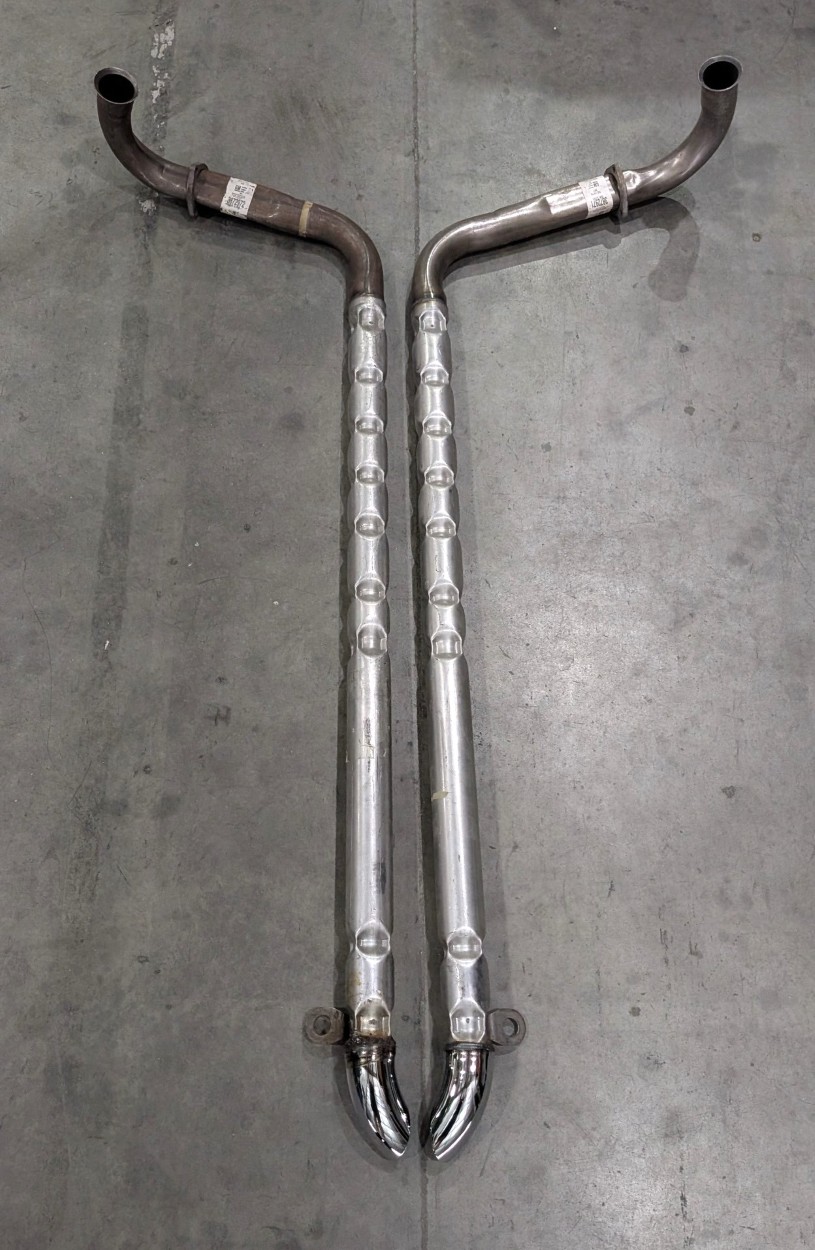
Engineering Specifications: Factory 2.0-Inch vs. 2.5-Inch N14 Collector Systems
General Motors engineered two specific exhaust core diameters for midyear Corvettes. The choice between a 2.0-inch and a 2.5-inch inlet is dictated strictly by the physical outlet diameter of your engine’s cast iron exhaust manifolds, cylinder head CFM flow rates, and model year specifications.
| Metric & Capability | NOS GM 2.0-Inch Chambered Assembly | NOS GM 2.5-Inch Chambered Assembly | Generic Aftermarket Reproduction Systems |
|---|---|---|---|
| GM Part Number(s) | 3877215 (LH Driver-Side Fitment) | 3872971 (RH), 3872972 (LH) | Varies (Non-OEM / Universal Stamping) |
| Collector Flange ID | Exact 2.000 inches | Exact 2.500 inches | Often slotted or stepped (2.0″ to 2.5″ adapters) |
| Primary Applications | 327 ci Base / Moderate HP (250 hp, 300 hp) | 327 ci High-Po (L76, L79, L84) & 396/427 ci Big Blocks | Generic small-block/big-block universal sweeps |
| Acoustic Profiling | Higher-velocity tone, tuned small-block backpressure | Deep idle rumble, open acceleration bark, low restriction | Resonant drone at 2,200–2,800 RPM due to irregular internal baffles |
| Baffle Construction | Factory mechanical crimp, internal chambered lobes | Heavy-gauge stamped internal louvers, flow-calibrated | Spot-welded standard perforated glass-pack cores |
| NCRS Flight Verification | Undamaged original tooling, authentic seam contours | Documented factory seam lines, correct collar radii | Pronounced modern mandrel-die flats; incorrect bead heights |
| Collector Mating | Flat-face cast iron seal; factory donut gasket | Direct spherical/beveled mechanical seat | Flat-flange slip-fit requiring sealant pastes or soft copper shims |
Precision Fitment for 2.0-Inch Small Block Manifolds
Base and moderate-output 327 cubic inch engines rely on factory cast iron exhaust manifolds with a 2.0-inch outlet. Installing an improper pipe size causes exhaust leaks, damaged manifold studs, and cabin fumes.
For 2.0-inch manifold configurations, the genuine assembly is the 1966–1967 Corvette NOS 2″ LH Side Exhaust Pipe GM 3877215, which also fits 1963 through 1965 models equipped with 2.0-inch manifolds.
Using the correct factory assembly ensures:
- Precision Collar Alignment: Matches the angle of the original cast iron manifold horn without bending stresses.
- Chassis Clearance: Clears the front steering drag link, pitman arm, and lower control arm crossmember.
- Calibrated Backpressure: Maintains low-RPM scavenging velocity for hydraulic-lifter street drivability.
Provenance and Preservation: Factory 2.5-Inch Chambered Piping
High-performance solid-lifter small blocks (L76, L84) and Mark IV big blocks (L36, L68, L71, L72, L88, and 1965 L78 396) generate higher exhaust gas volume and temperatures. These engines use 2.5-inch high-flow cast manifolds to limit backpressure at wide-open throttle.
To maintain proper performance and authenticity, install the genuine factory-matched set: the 1965–1967 Corvette NOS 2.5″ Side Exhaust Pipes GM 3872971 & 3872972.
These factory assemblies provide:
- Accurate Internal Flow Volumes: Multi-chambered inner wall profiles balance backpressure and sound damping without synthetic packing fibers.
- Thermal Resilience: Original GM wall thickness handles the extreme exhaust gas temperatures (EGTs) produced by 427 big blocks under load.
- Correct Rocker Panel Reveal: Keeps proper clearance beneath the outer aluminum covers, preventing heat transfer to the fiberglass rocker channels.
Restoring an early generation Corvette involves the same precision sourcing requirements; choosing authentic C1 Corvette parts guarantees factory-correct mechanical alignment across steering components, suspensions, and chassis assemblies.
Sourcing Paradigms: NOS Original Surplus vs. Aftermarket Reproductions
Choosing the right components for a high-level restoration involves balancing factory authenticity, ease of fitment, and long-term durability.
Technical Installation: Frame Alignment and Heat Isolation
Installing original N14 side exhaust requires precise alignment to protect the lower fiberglass sills from thermal damage while avoiding mechanical stress on the exhaust manifold studs.
1. Manifold Face Preparation and Collar Mating
Inspect the cast iron manifold outlets for carbon buildup, pitting, and planarity.
- Remove old gasket residue with a flat brass scraper to avoid gouging the sealing lip.
- Check studs for thread stretching; replace worn studs with correct GM-pattern stepped studs.
- Loosely install the forward collector pipe with the donut gasket in place, without torquing the brass nuts down completely. This allows the assembly to pivot during chassis alignment.
2. Longitudinal Leveling and Rocker Spacing
Align the chambered body along the lower frame channel beneath the birdcage sill.
- Secure the center and rear exhaust hangers into the original frame weld nuts using rubber isolation biscuits. Brittle or aged rubber allows high-frequency vibrations to travel into the cabin.
- Verify a minimum 0.75-inch clearance between the hot exhaust core and the fiberglass body panel to prevent paint blistering.
- Inspect the turnout tip alignment relative to the rear tire opening to confirm correct spacing on both sides.
3. Progressive Torquing Sequence
Once the longitudinal run hangs without contacting the chassis, secure the hardware:
- Tighten the rear frame-bracket fasteners to 25–30 lb-ft.
- Alternate between the inner and outer collector nuts on the forward manifold flange, tightening them in 5 lb-ft increments to a final torque of 30–35 lb-ft.
- Re-verify clearance around the steering linkage, pitman arm, and front sway bar bushings through a complete, lock-to-lock steering sweep.
For owners restoring third-generation Stingrays, using authentic C3 Corvette parts provides the same precise factory tolerances across chassis and powertrain assemblies.
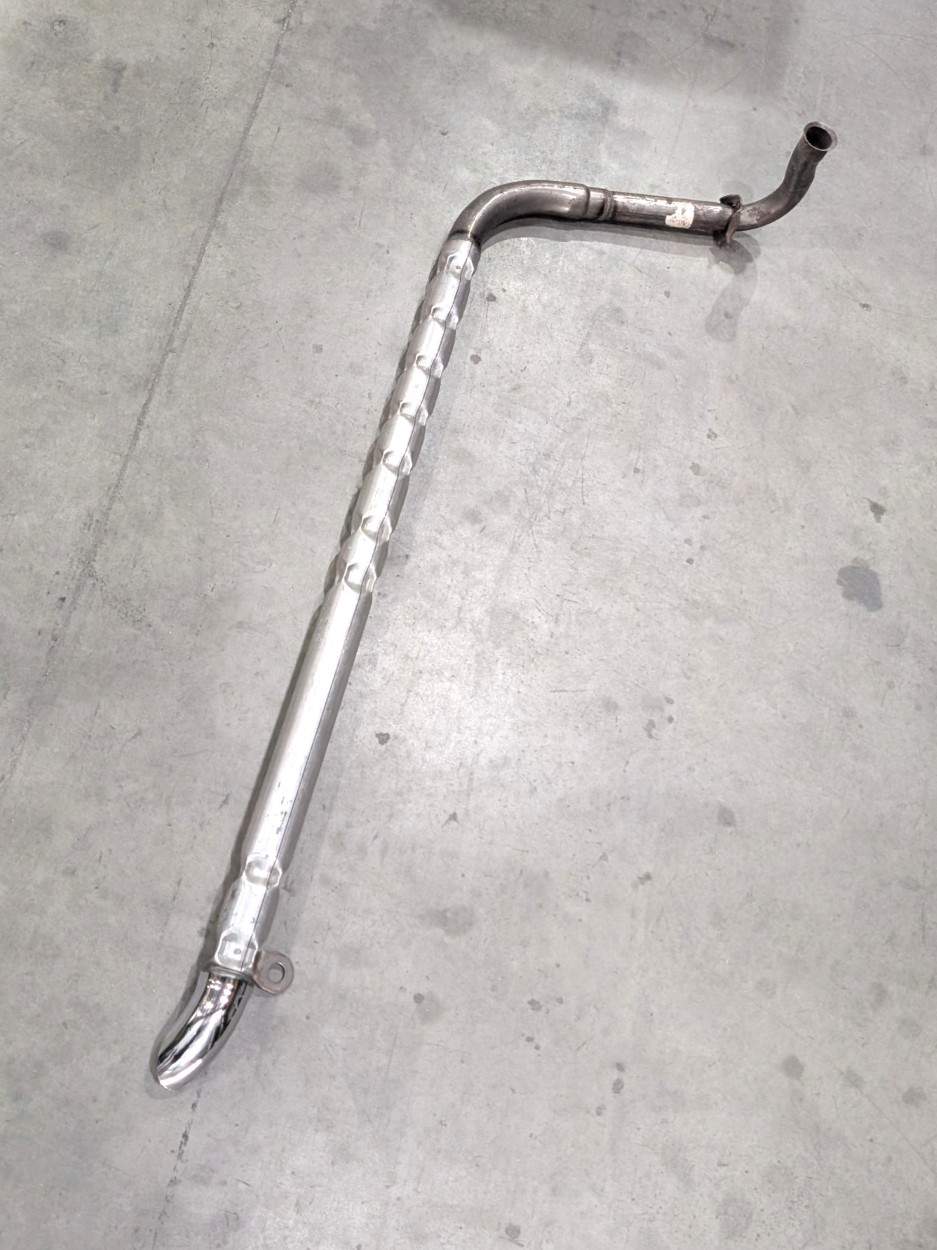
Frequently Asked Questions About Original C2 Corvette Side Exhaust Pipes
How do NCRS judges distinguish original NOS C2 side pipes from reproductions?
NCRS judges inspect several specific factory characteristics: the seam weld profile, the stamped collector flange shape, the flange thickness, and the crimped internal chamber pockets. Reproductions often feature modern continuous-mandrel clamp indentations, excessively wide TIG welds, uniform laser-cut flanges, and incorrect hanger bracket offsets. Factory GM NOS side pipes feature cold-formed compound bends, intermittent resistance welds, and specific stamped part numbers that match original GM engineering blueprints.
What causes interior drone with aftermarket side exhaust pipes?
Interior exhaust drone is typically caused by thin-gauge tubing wall thickness paired with incorrect internal baffle design. Original GM NOS pipes use heavy-gauge steel with tuned, chambered acoustic pockets that break up standing sound waves within the 2,200 to 2,800 RPM cruising range. Modern aftermarket systems often use thinner steel tubing and straight-through, perforated glass-pack cores, which transmit resonant harmonic frequencies directly into the fiberglass floor pans and passenger cabin.
Can I install 2.5-inch factory side exhaust pipes on standard 2.0-inch small-block manifolds?
No. A 2.5-inch pipe will not seat correctly against a 2.0-inch manifold outlet horn. The collector collar will bottom out against the manifold casting ears before creating a reliable seal around the perimeter, resulting in severe exhaust leaks and cracked casting ears. To install 2.5-inch side exhaust on an original 2.0-inch small-block engine, you must swap the factory manifolds for 2.5-inch high-performance exhaust manifolds (such as GM casting 3797901/3797902) or source the correct GM 3877215 2.0-inch driver assembly.
How much clearance is required between the fiberglass body and C2 side pipes?
Proper factory installation requires a minimum clearance of 0.75 inches (19 mm) between the bare metal exhaust core and the lower fiberglass rocker sill. Without this air gap, radiant heat will blister exterior paint, warp the fiberglass sill, and soften the bonding resin along the bottom of the doors. Maintain this clearance by properly setting the slotted lower frame-rail hangers and using pliable, factory-spec rubber isolation mounts.
